Businesses — Shops, offices, premises

Premises that regulate themselves, energy use under control.

Heating, lighting, ventilation: Nexom equips your premises so they no longer heat or light empty rooms, and stays by your side for the follow-up. One point of contact, one quote.

Which premises?

Every business has its quiet hours

Everywhere we see the same thing: equipment running when nobody is there. Here is what changes once your premises are equipped, business by business.

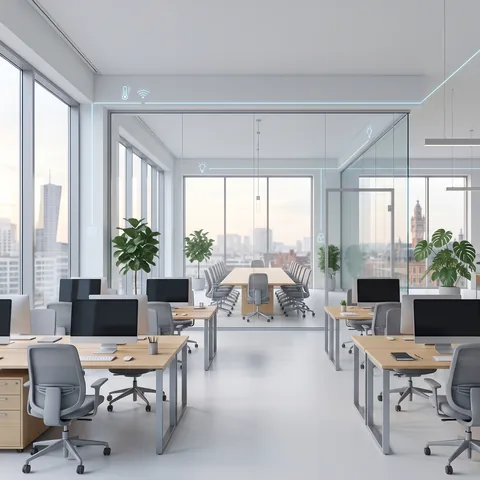
Offices

  • Friday, 6 pm: once the last person has left, the heating turns down, the lights go off and the doors lock.
  • During the week, a booked meeting room warms up before the meeting starts, then goes back to standby once it is empty.
  • On Monday morning, the offices are already comfortable when the team arrives.

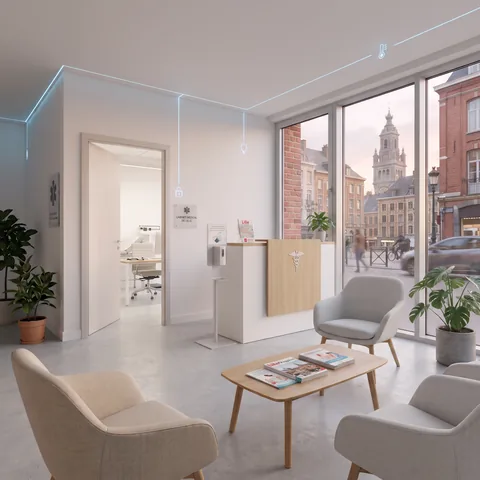
Practices and independent professionals

  • On Wednesday the practice is closed: it switches to a reduced temperature without anyone having to think about it.
  • On Thursday, the waiting room is welcoming from the first appointment, and each consulting room keeps its own temperature.
  • In the evening, a single touch on the way out switches everything off and locks the door.

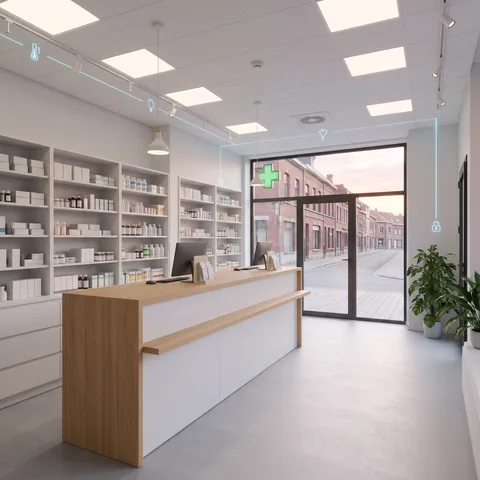
Pharmacies

  • At closing time, the air conditioning goes into standby, then the pharmacy cross and the window display switch off at the set time.
  • On duty nights, a single touch keeps everything on.
  • And if the stockroom has been left open or the temperature in the dispensary drifts, you get an alert on your phone.

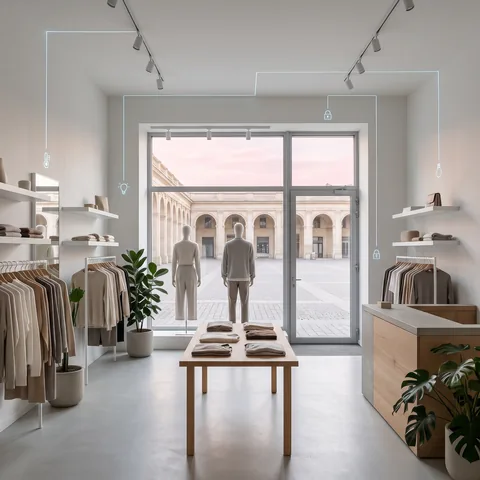
Shops and retail chains

  • 7:30 pm, the shutter comes down: the air conditioning turns off, the lights go out and the shop window stays lit until 11 pm.
  • The next day, the shop is at the right temperature when it opens, not three hours earlier.
  • The same settings apply in each of your stores, and you monitor them all from a single screen.

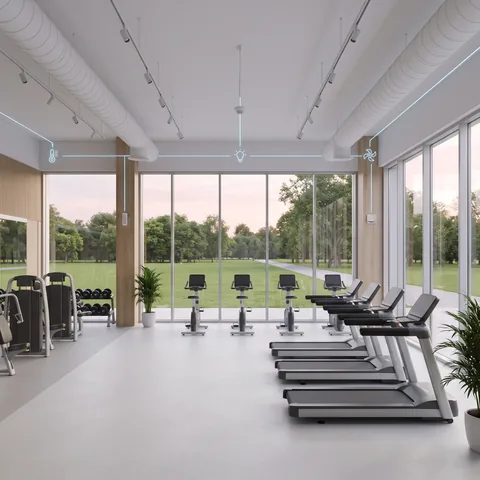
Gyms

  • 2 pm, the gym is almost empty: the ventilation slows down and part of the lighting switches off.
  • 6 pm, rush hour: everything ramps up again before the air gets stuffy.
  • At night, only the bare minimum keeps running, and hot water is ready for the first members in the morning.

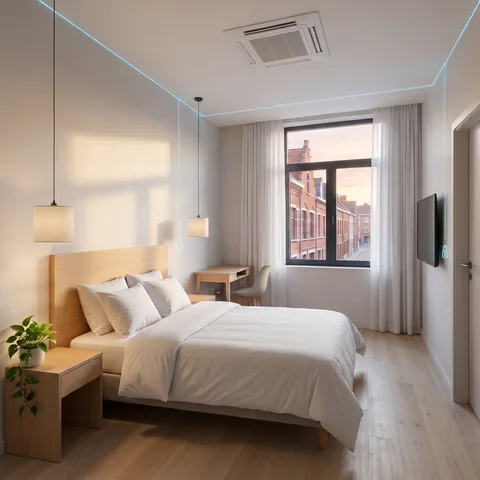
Hotels and accommodation

  • A room is vacated: the heating turns down.
  • A guest opens the window: the radiator turns off, and comes back on when the window is closed.
  • A guest arriving tonight: the room is prepared with a single touch from reception.
  • Corridors and the lobby light up as people pass, rather than all night long.

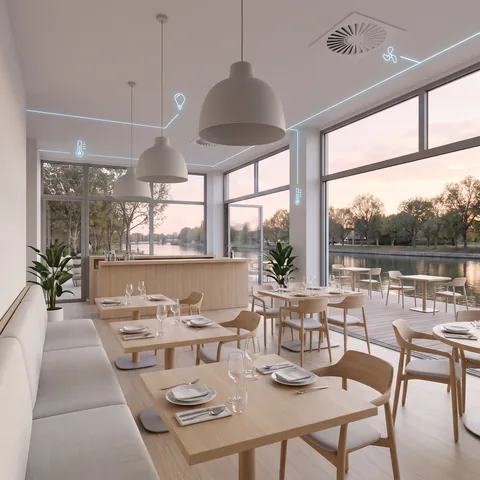
Restaurants

  • Between services, the dining room goes into rest mode: ventilation slowed, lights dimmed.
  • An hour before dinner, it is back at temperature with its evening atmosphere, without anyone touching a thing.
  • In the evening, the terrace is heated only when it is occupied, and the sign switches off after the last guest leaves.

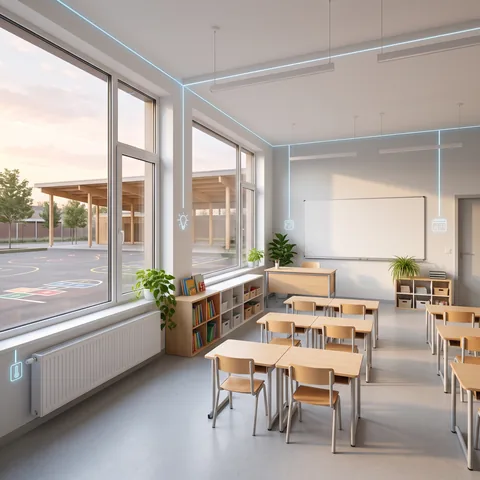
Schools and town halls

  • Last day before the holidays: classrooms switch to a reduced temperature until the day before school starts again.
  • On Wednesday afternoons and at weekends, only the rooms in use are heated.
  • The community hall is heated only on the days it is booked, and the town hall monitors the energy use of each building.
What we control

All your equipment, working together

Heating, lighting, ventilation, access: a single system coordinates them according to your opening hours and how your premises are actually used.

Heating & air conditioning

The right temperature zone by zone, matched to your opening hours and actual occupancy. Nothing heats or cools empty premises.

Lighting

Lights that switch on when someone is there and off automatically at closing time, with levels adjusted to daylight.

Ventilation & air quality

Ventilation that follows footfall: slowed down in quiet hours, at full capacity when needed.

Signs, shop windows & blinds

Sign and window lighting schedules kept without a second thought, and blinds that adjust themselves to the sun.

Access

Doors locked at closing time, access by badge or code, and an alert if a sensitive room is left open.

Energy

Your energy use tracked item by item, with a regular report to see what is changing and make informed decisions.
How it works

Three steps, one point of contact

From our first visit to your premises to the monitoring of your energy use, you deal with a single contact.

01

Free on-site audit

We walk through your premises and equipment, then send you a report with improvement options and a ballpark figure. If your building falls under the BACS decree, we tell you.

02

Turnkey installation

We design the installation, coordinate the fitting with a partner electrician and commission everything. One quote, and no more disruption to your business than necessary.

03

Long-term follow-up

Energy monitoring, seasonal adjustments, upgrades and troubleshooting: your installation stays efficient year after year.

Frequently asked questions

Your questions

What is a building management system (BMS)?

A BMS is the system that controls a building's technical equipment: heating, ventilation, air conditioning, lighting, blinds and energy. It stops empty premises from being heated or lit, improves comfort and makes the building easier to run.

Is my building covered by the BACS decree?

The French BACS decree (building automation and control systems) requires such a system in non-residential buildings whose heating, ventilation and air-conditioning equipment exceeds 70 kW of rated output, with the deadline postponed to 1 January 2030 (installations above 290 kW are already covered). Nexom checks whether your building is concerned, free of charge, during the on-site audit.

Where does Nexom work?

Nexom is based in Lille and works throughout the Lille metropolitan area and the Hauts-de-France region.

Book a call

Let's talk about your project

30 minutes to understand what you need, scope your project and explain the next steps. No commitment, by video call or phone. The booking calendar is displayed in French: simply pick a time slot.

  • 30 minutes: a short, structured and useful conversation.
  • At your own pace: choose the time slot that suits you.
  • No commitment: a free and confidential first conversation.